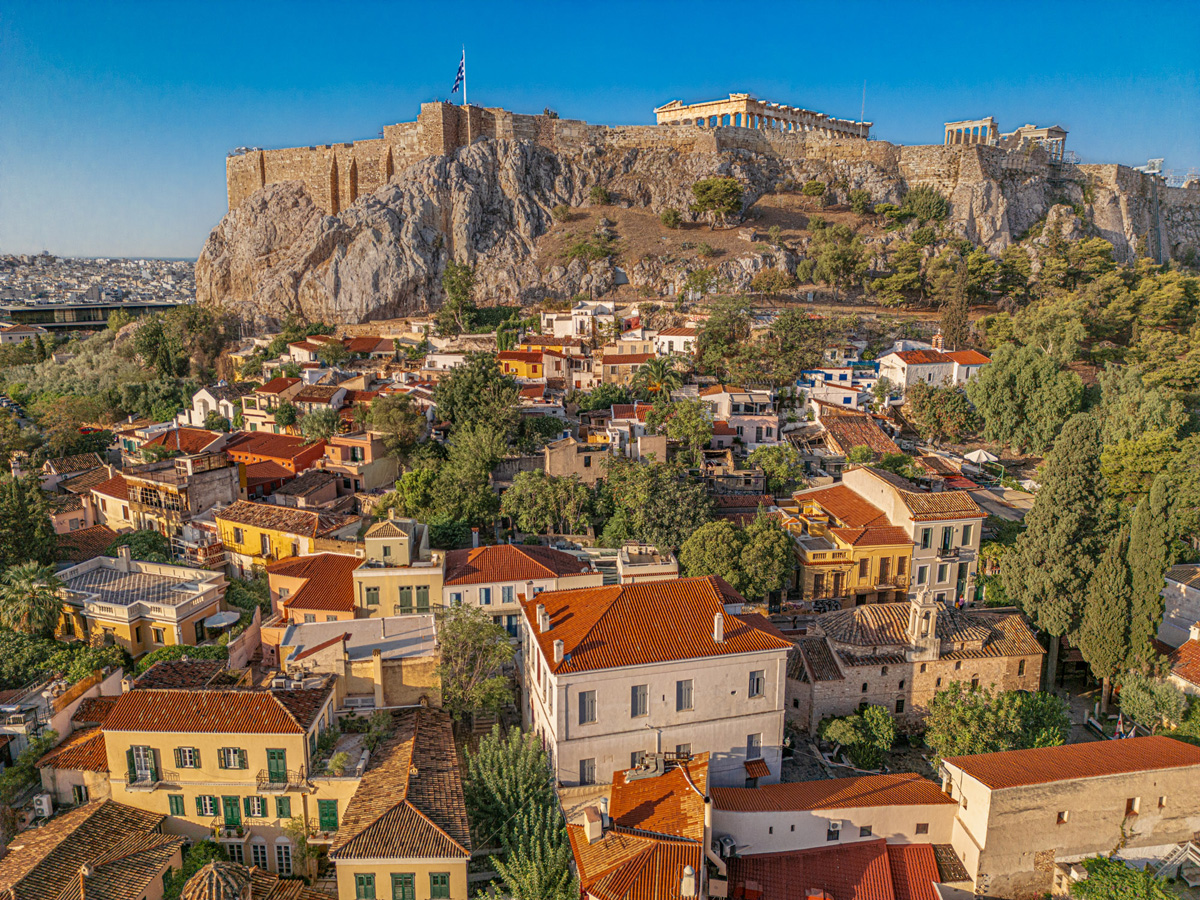
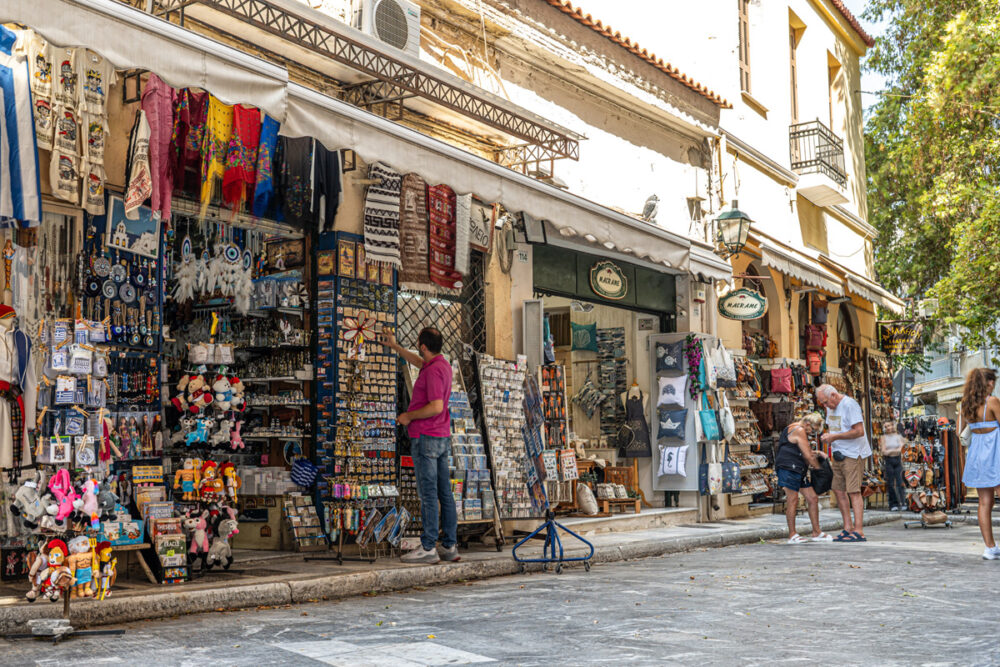
Plaka is the part of Athens that feels less like a neighborhood and more like a memory — warm, familiar, timeless.
You walk into it and immediately the city softens.
The noise drops. The colors brighten. The streets become narrow, human, intimate.
Locals call it “the Neighborhood of the Gods.”
And when you walk under those tiny balconies, next to jasmine walls and cats sleeping on warm steps, you understand why.
Plaka is not a place you visit.
It is a place you feel.
A Living Village Beneath the Acropolis
Plaka is the oldest continuously inhabited neighborhood in Athens.
People have lived here for over 3,500 years — from the ancient Athenians to Byzantine monks, Ottoman merchants, 19th-century refugees, and the families who still live in the neoclassical houses today.
Everything here carries that long breath of history:
the marble pavements polished by centuries
the layered houses built on ancient foundations
the Byzantine churches on the corners
the old tavern signs that refuse to die
Plaka is Athens slowed down into its most human form.
A Short History of Plaka (Useful + Beautiful)
Ancient Times: The area formed part of the classical city’s residential quarters. Archaeologists still find ancient wells under modern homes.
Roman Period: Expansion of baths, markets, and small shrines.
Byzantine Era: Churches begin to appear; Plaka becomes a small spiritual hub.
Ottoman Era: The neighborhood transforms into a lively bazaar with merchant houses.
19th Century: After Greek independence, Plaka becomes the “old town” of the new capital.
1970s: Pedestrianization and restoration save the neighborhood from decay.
Today: A protected heritage zone with strict architectural rules — preserving its neoclassical charm.
What Makes Plaka Special
1. The Light
Plaka is full of reflected light — bouncing off white steps, marble corners, pastel houses.
In photographs (especially in BW) it becomes a canvas of shapes and clean contrasts.
2. The Layers
You walk through one street and cross centuries.
Ancient columns behind modern doors.
A 1,000-year-old church between two cafés.
A Roman mosaic next to a tavern kitchen.
3. The Pace
Plaka forces you to slow down.
Nobody rushes here.
People sit outside with coffee, not because they’re thirsty, but because they want a quiet moment with Athens.
4. The Sound
Guitars. Footsteps. Children laughing.
A conversation drifting from a balcony.
The soft noise of a city that refuses to forget joy.
Beautiful Corners to Explore
Anafiotika: A tiny Cycladic village built by craftsmen from Anafi Island.
Lyssidra Street: One of the most photogenic paths under the Acropolis.
Mnisikleous “Stairs”: Cafés built into stone steps — iconic morning coffee shot.
Kapnikarea Church: One of the oldest Byzantine churches in Athens (11th century).
Tower of the Winds: The world’s first meteorological station, right next door.
Adrianou Street: The heart of Plaka, full of life, shops, and small surprises.
For Photographers (BW & Colour)
Plaka is pure gold:
Narrow alleys create perfect shadow lines
Neoclassical windows form natural frames
Cats and people give warm human presence
Textures (stone, wood, marble, plaster) transform beautifully in monochrome
Morning and late afternoon light are magical — soft, clean, emotional.
Plaka is the part of Athens where every corner is a photograph waiting to happen.
Visitor Tips
Best time: Morning light / late afternoon
Avoid: Midday heat in summer
Wear: Comfortable shoes — many surfaces are slippery marble
Must try: A coffee at the “Plaka Steps,” a slow walk to Anafiotika, sunset near the edge of the Acropolis wall
Look closely: Door knockers, balconies, flowers — Plaka is full of tiny details
Why Plaka Matters
Because Plaka is not only beautiful — it is Athens in its purest form:
human, warm, layered, slow, full of history yet still alive.
When you walk through Plaka, you don’t just admire a neighborhood.